Pizzeria meets haute cuisine to research and create a gourmet pizza made with local products representing the qualities of an Italian region: the Veneto region.
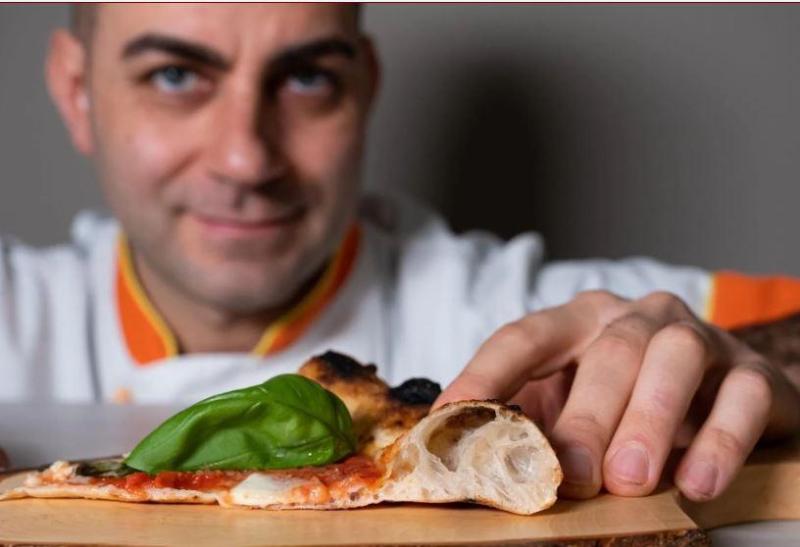
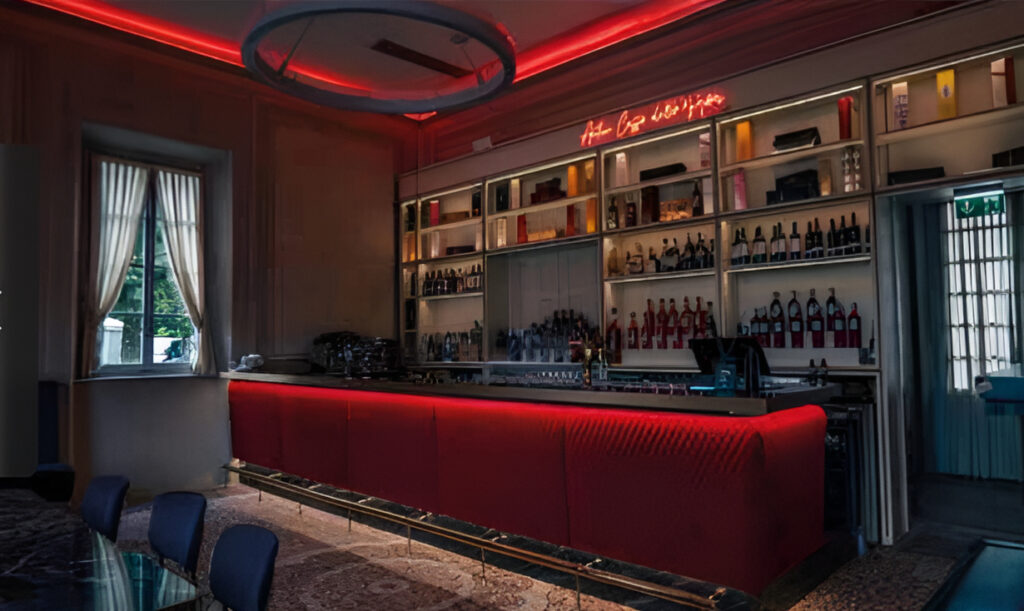
When cuisine meets Pizzeria, something significant always come up, especially if people like Denis Lovatel and Fabio Groppi are involved. Lovatel, of the pizzeria Da Ezio at Alano di Piave, in the Belluno area, is by now known to everyone as the ‘pizzaiolo di montagna’ (pizza maker of the mountains). Groppi is a Veronese chef of Ligurian origins with many experiences around Italy and a Michelin star in Madonna di Campiglio; he has recently arrived in Fumane, in the magnificent Villa della Torre, a monumental residence dating back to 1500 and owned by the Allegrini family. We meet them to talk about a pizza that is connected to a very often abused concept in gastronomy, the concept of territory.
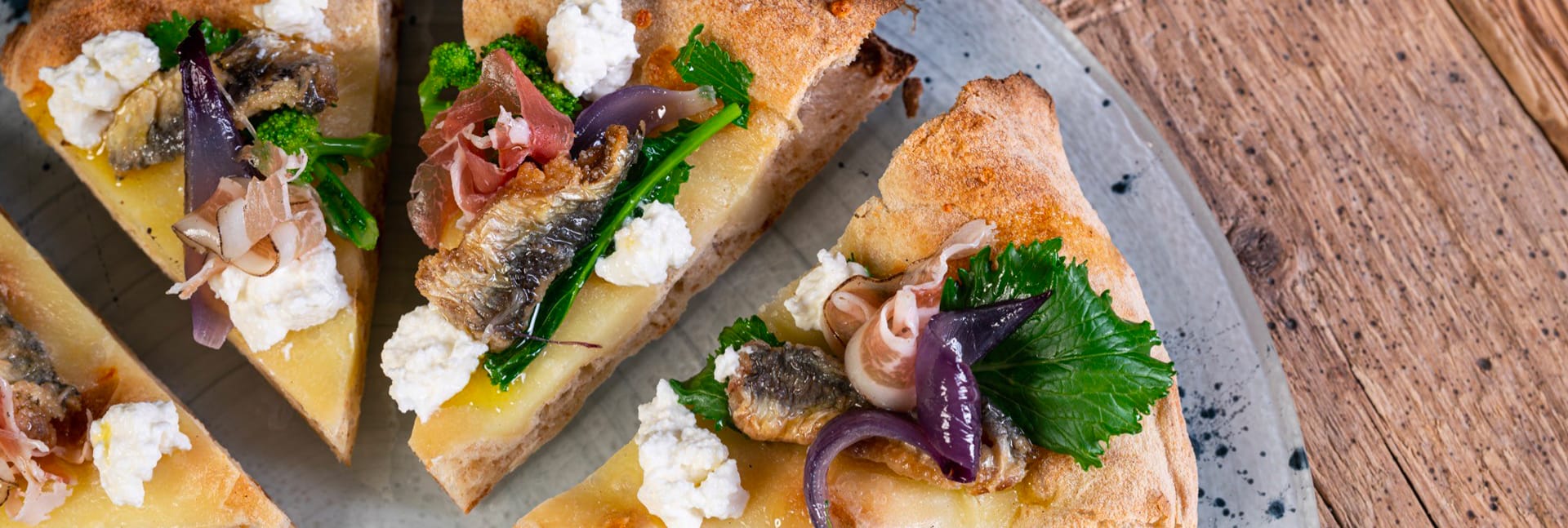
In this case, however, both have made a careful reflection, Lovatel looking for dough that would represent the Veneto region essence and Groppi trying to conceive a topping related to it. On one side the north, on the other the west. Lovatel says: “it was nice to combine these two parts in a single dish, creating a slightly different pizza than the crispy one I offer in my restaurant. In this case, I wanted to introduce a little softness.” On his part, Groppi continues: “the idea was to conceive something complete, because the base must not be a simple support. So I thought of a typical Venetian recipe, that is ‘sarde in saor‘ (sardines in saor sauce), a marinating method that allows for long preservation. I used lake sardines, also known as Agoni. I cleaned, processed and fried them and then marinated them in a vinegar that we produce here, not too sour to avoid covering the flavor too much.
As a contrast, I used a fresh ricotta cheese and cooked the onion using a microwave jar-cooking technique; finally, I wanted to add a fragrant vegetable element like broccoli rabe.”
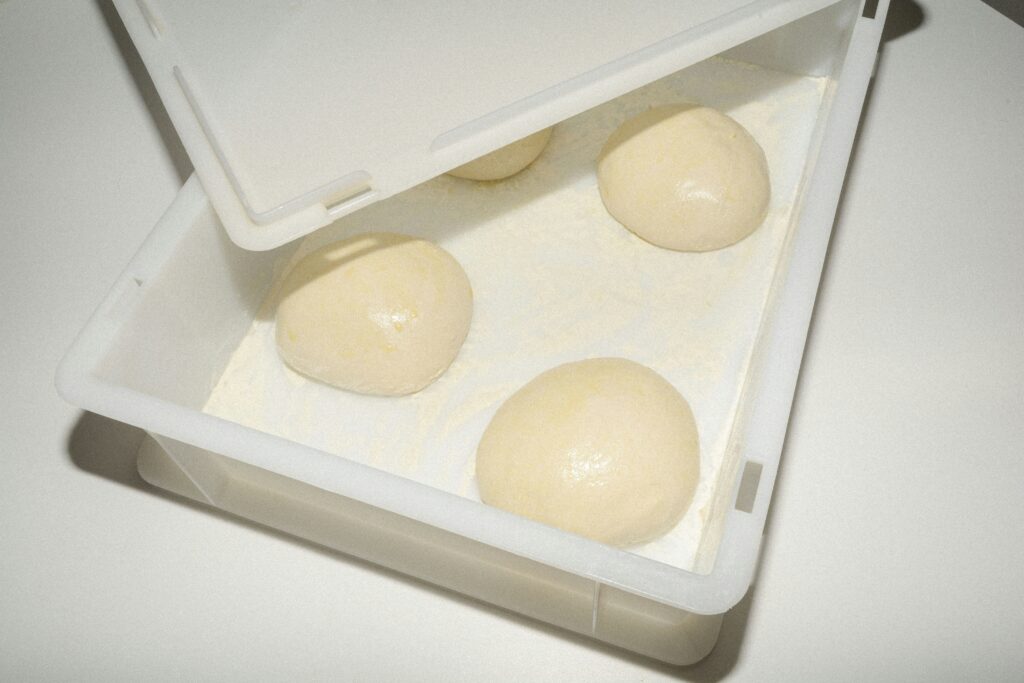
For the dough, Lovatel used a blend of two flours, semi-whole flour for the refreshment part and for a part of the biga, and then a type 0 flour to keep a long leavening time. The hydration was about 75%, quite high: “usually my dough is made with a technique called ‘dry out’, which requires less hydration, but in this case I increased it to give softness and lightness”. The idea of giving a slight hint of toasting to support the strong flavors of the topping was also a nice one: “In this way I can convey the territory through the dough as well, although I usually prefer balanced flavors to exaggerated characterizations. So I toasted and steeped some hay. I used the infusion water to knead, which gave to the dough a note that reminds me of mountains and meadows.”
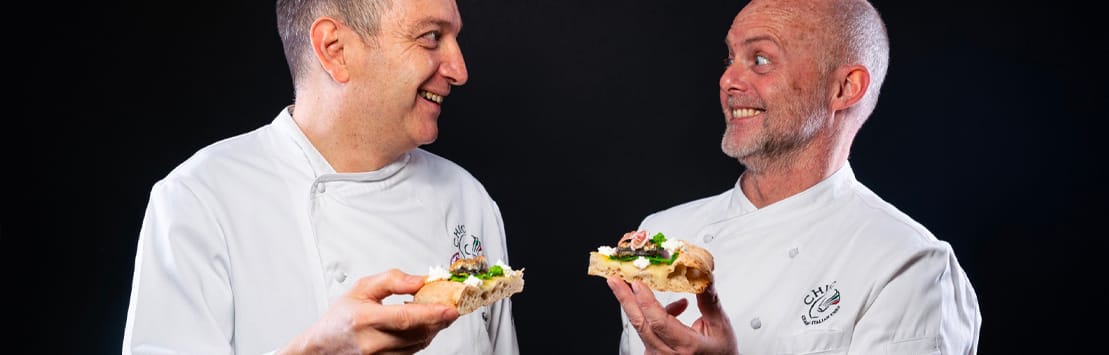
Dealing with a thorny subject such as the perfect contemporary pizza, the debate on what are the peculiarities defining it is inevitable. One of the discussion topics is how well the dough/topping elements really integrate. Groppi says: “I believe that very often we find good dishes on top of a not particularly successful base and vice versa excellent dough with inadequate toppings”. Similarly, Lovatel explains: “I perfectly agree with the idea that the topping should be mixed with the dough; I often find pizzas that have unconnected flavors when you bite them. That’s why, when I work with a chef, I like to express my ideas and see them interpreted in a suitable topping, because we’re talking about two worlds that are close but in any case separate from each other and being able to put them together means making an excellent pizza.
The taste should be homogeneous, and then you can work on the right amount of acidity, for example, in case you need to balance the mozzarella or cheese part.”
In Groppi’s opinion, the guest should not be forced to concentrate on appreciating it in a quiet and relaxed moment such as eating at the table: “you have to be good at placing the toppings, because from the first to the last bite, each slice must contain the right ingredients.” And Lovatel adds: “The important thing is to find the balance in each slice, that’s what the pizza maker has to guarantee, even when there are too many people in the pizzeria. In fact, if we exaggerate with any ingredient, we completely unbalance the taste. In any case, in order to make an excellent pizza it is not enough to use valuable elements, because its ‘engine’ is the dough and that is what defines its identity. Then you can study the rest”. Finally, how much can a chef learn from a pizza chef and vice versa? Groppi answers: “Chefs know how to do a little bit of everything, but at the same time we must always continue to learn. For me it is difficult, for example, to make dough that has a guaranteed qualitative continuity. So I’m going to ask a pizza maker.” Similarly, Denis Lovatel is sure of how useful the exchange of ideas is: “Following the ‘Infusions’ project with 12 chefs who think in their own way, you realize how much there is to exchange.” And this is a topic that will have room for further exploration.