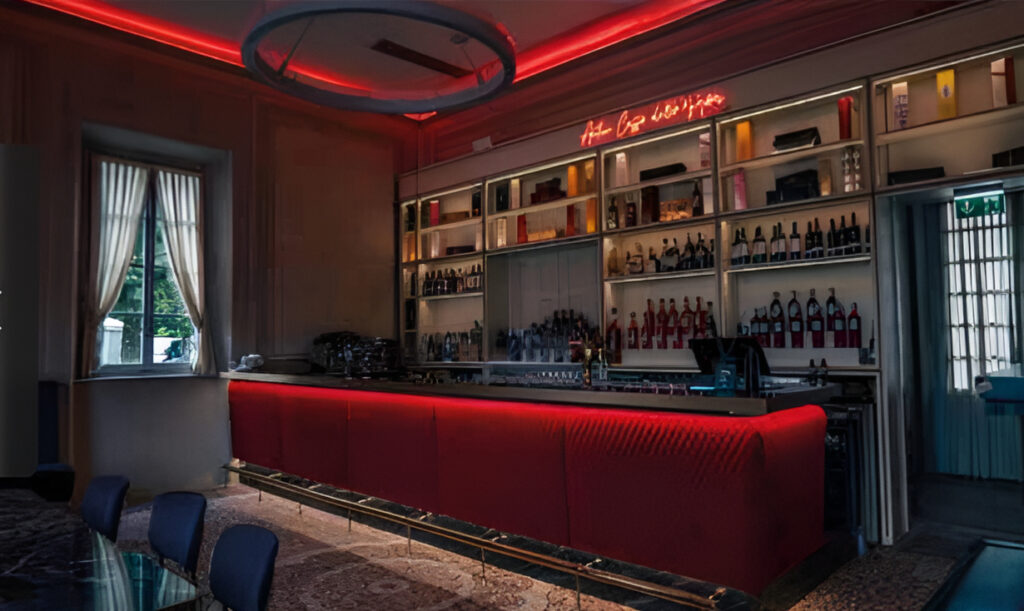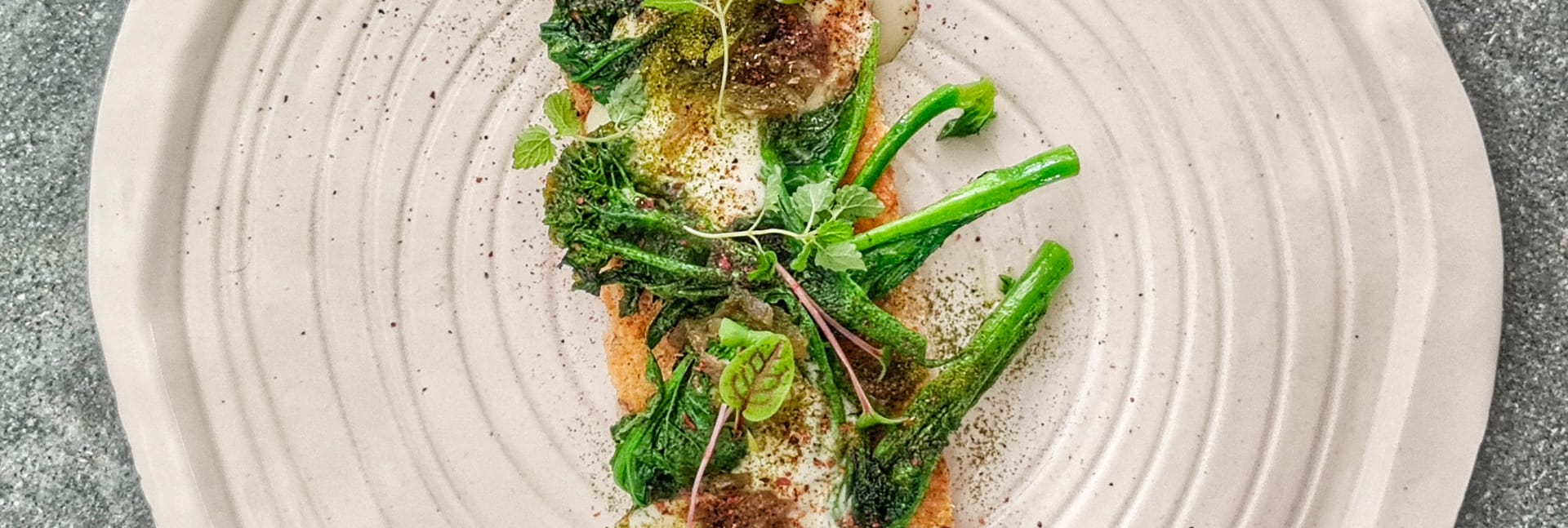
It was a very original meeting, the one between Paolo De Simone and Antonio Danise. In fact, the former’s new restaurant in Milan is not yet ready, so the pizza they made together was prepared by using an oven at the restaurant of the beautiful Villa Necchi alla Portalupa. Located in Lomellina, in the heart of the Ticino Park, the chef’s workplace is the old hunting lodge of the important Necchi family, which has been converted into a splendid resort with 21 suites, a venue for events and a fine-dining corner. “We understood each other immediately because we speak the same language, we are both from Campania, and we immediately had very clear ideas.”
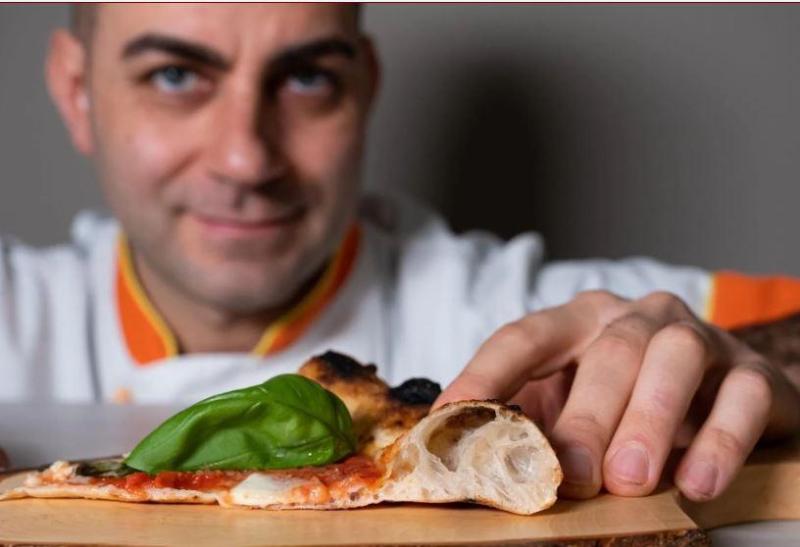
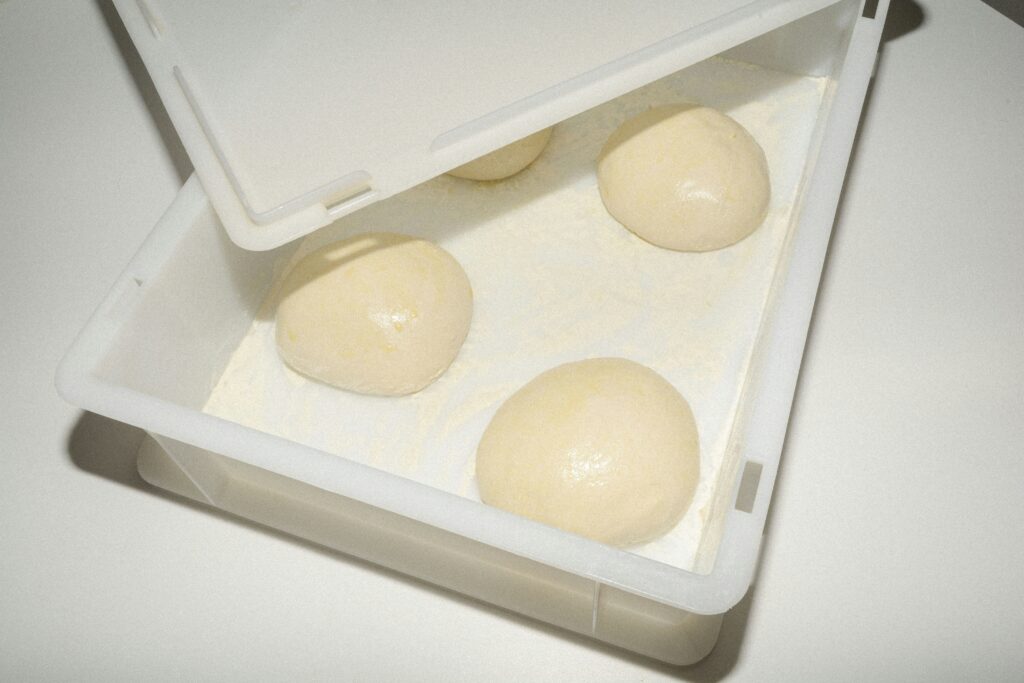
De Simone continues, “Antonio created a topping mixing together local ingredients and a hint of our homeland, while I made the proper dough for the savory and strong ingredients Antonio chose. In fact, we needed something that was at a certain level and could support those ingredients, and that’s why I used biga as a boost, then I mixed several types of flour as I’m used to do and as they used to do in the past. So type 0, whole wheat and type 1 flour and then I even added some seeds. Needless to say, a long leavening also played a key role. Eighteen hours earlier, I kneaded the dough with water and extra-virgin olive oil, to make a focaccia base that could be crispy on the outside and soft on the inside, in this case adapting the dough to the ventilated oven of the restaurant, which is different from that of a pizzeria. After spreading it in the baking pan, the dough should be punctured so that it does not puff up and then baked for about 6 minutes at 260/270 °C.”
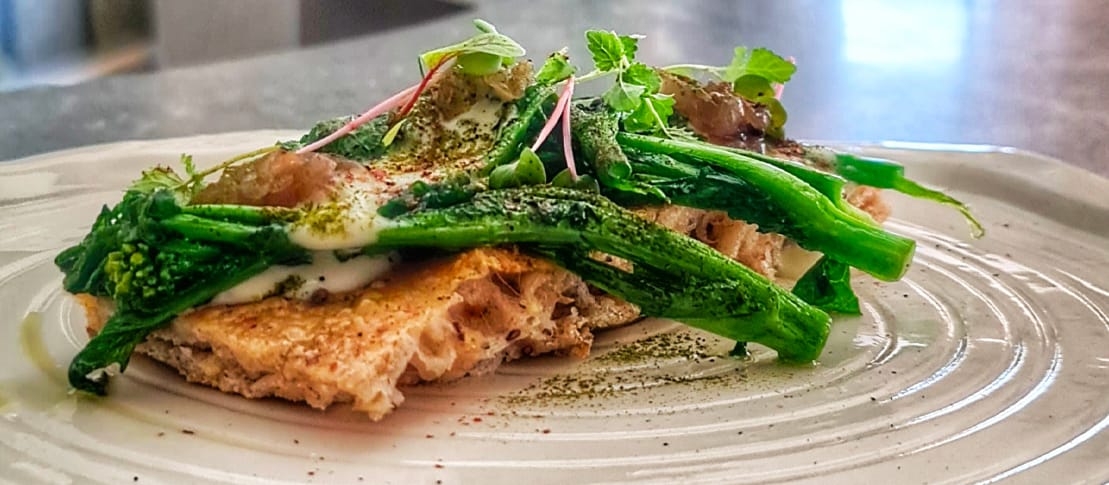
For his part, Danise explains, “I thought about using something from Campania and combining it with the products of the land that has been hosting us for years now. So I made a sauce with a bufala blue cheese that is processed in San Genesio, in the province of Pavia. Therefore, I decided to use friarielli, a key product of the Neapolitan tradition that I added after baking to give some freshness. Finally, the sweet touch of the Breme onion, a very special product from Pavia that is harvested only on certain days in July; to make it appreciated all year round, however, we make a preserve.”
Also essential is the attachment to the principles of sustainability, a theme that is very important to Chic, with Chic Respect, the association to which both professionals belong: “We don’t throw anything away and we give value to the outer part of the onion, making a powder that we add to the friarielli; we also add sea lettuce, as a reminder of our origins.” On the issue of sustainability, Paolo also recalls how it is a term that defines something that was already happening in the past: “It is tradition that reminds us of the concepts of sustainability and respect for the environment. It was already there in the peasant culture before it was given a name, in the recipes of the past where nothing was wasted.
On the relationship between cooking and pizza making, both Paolo De Simone and Antonio Danise have it clear in their minds that the gap is quickly narrowing. Danise recalls, “pizza has made great progress in terms of customer perception. The products that are used are no longer simply put on the pizza but cooked, not simply taken from a box but processed in a certain way. Then the chef’s knowledge is integrated with that of the pizza maker to get a product with the highest performance. Nowadays, people going to a certain kind of pizzeria no longer need just to feed themselves, but to have a more complete experience. That’s why you have to provide customers with a little bit of history and culture, especially about raw materials. That is to add something more that can give emotion beyond the simple gastronomic aspect.” And in this regard De Simone says, “My new restaurant in Milan – which will be ready very soon – wants to represent a new rebirth of pizza, beyond the outdated “gourmet” term. I want to dignify pizza even more with my idea, getting even closer to the restaurant business. Just as we stay longer in quality restaurants, so it has to happen at my pizzeria. Therefore, no longer something too fast, you have to enjoy it slowly. There will be many types of dough, as well as many versions, from crunch pizza to Neapolitan-style focaccia. The public is increasingly ready and attentive, and we must never stop trying to improve. All this is also possible thanks to the dining room staff, who makes at least 50 percent of the experience. I’ve put a lot of work into it, and the hospitality will be a real innovation.”