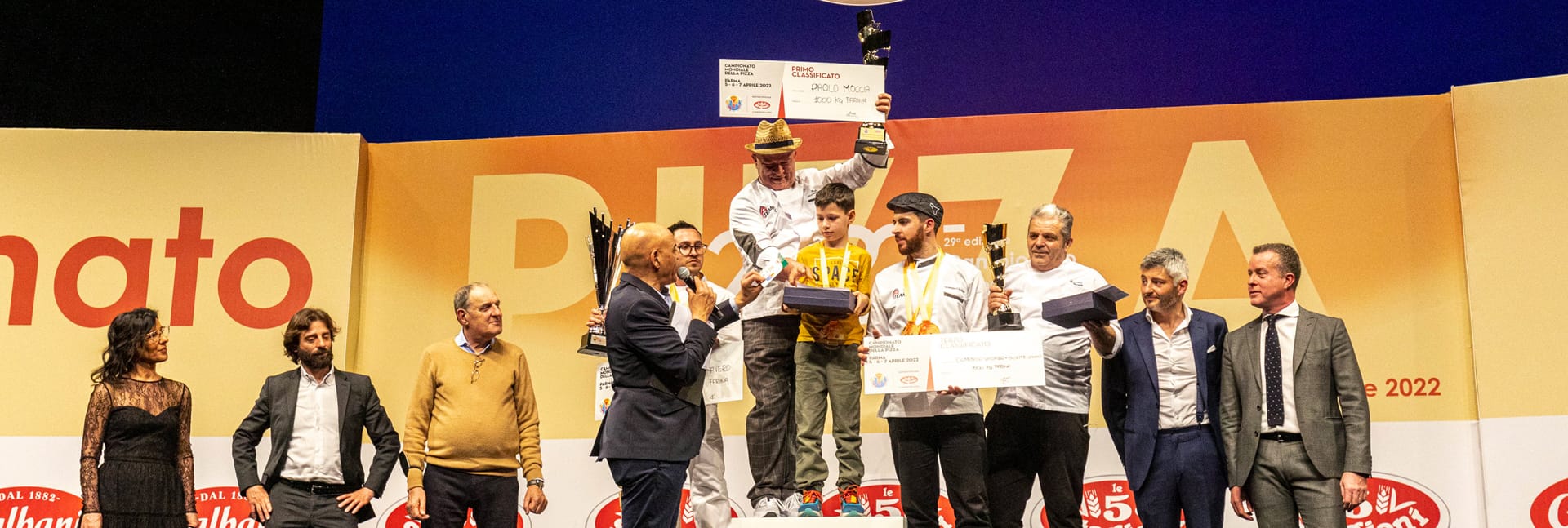
Pizza is increasingly the protagonist. Never before has the world’s best-known and best-loved Italian product evolved as it has in recent years, interpreting the development of research reserved for the raw material and its processing in every corner of the earth. Margherita, marinara, with traditional or sought-after ingredients, in the most classic versions and in those revisited with flair and creativity by master pizza makers. Agugiaro & Figna Molini is alongside the artisans of the product that is a symbol of Made in Italy in this moment of great revolution of the “flying saucer” that attracts the attention of enthusiasts, gourmet experts and the general public. This is why the historic milling company chose to be present at the World Pizza Championship hosted at the Palaverdi in Parma: three days dedicated to in-depth study, discussion and debate on the future of pizza attended by more than 700 master pizza makers and chefs from 40 continents. The Championship was not just a competition but a valuable appointment to meet pizza makers from all over the world in one place as part of a group that feels even more today the need to draw the possible future scenarios of this food at a time of continuous transformation and evolution for the whole sector.
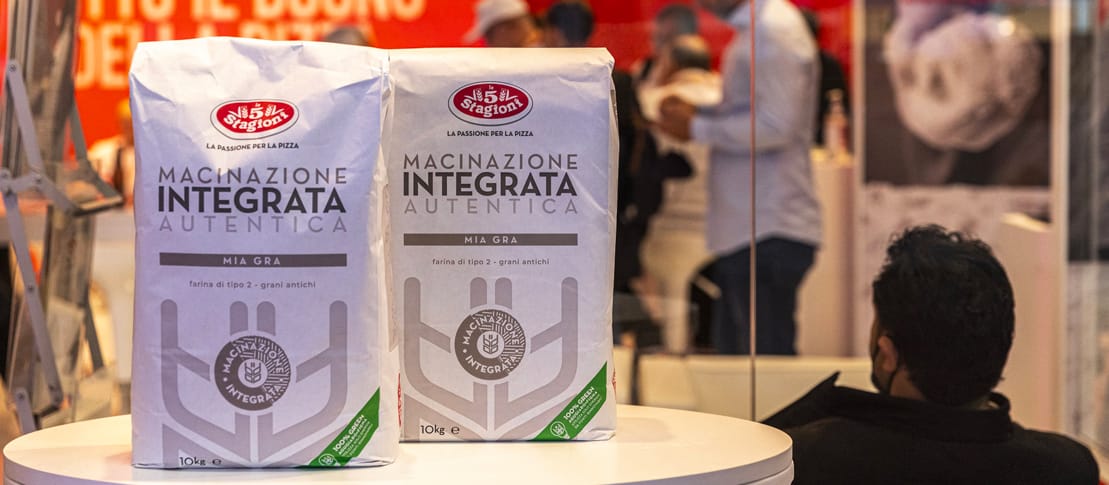
Agugiaro & Figna Molini supports the work and creativity of pizza makers every day with the Le 5 Stagioni line (www.le5stagioni.it), a range of flours, blends and yeasts designed and created to adapt to the different needs of professionals, obtained from the selection of grains from the best crops that undergo rigorous quality controls to offer a healthy product, capable of guaranteeing the best characteristics of the selected grains.
However, it has always been not only through raw material that Agugiaro & Figna Molini supports pizza makers. This year, even more than in the past, it celebrates, through the range of flours in Le 5 Stagioni, the champions competing at the different pizza competitions through the sharing of a common passion. A passion that unites and not divides. Starting point? The sport that represents the team, the magic of the team but also the dedication, commitment, effort and training to achieve better and better results, values shared with those of the pizza maker. In sports as in the art of pizza making, these principles represent the foundation for achieving optimal results, as true pizzaioli fuoriclasse!
The 5 Seasons has collected the stories of the protagonists of the industry who participated in the World Pizza Championship through a series of video interviews, but also by creating a photographic narrative that, like the sticker albums, wants to fix itself in time, telling the faces of those who preferred the group to personalism. Because together is better.
Learn more about the championship initiatives at www.pizzastories.le5stagioni.it/fuoriclasse
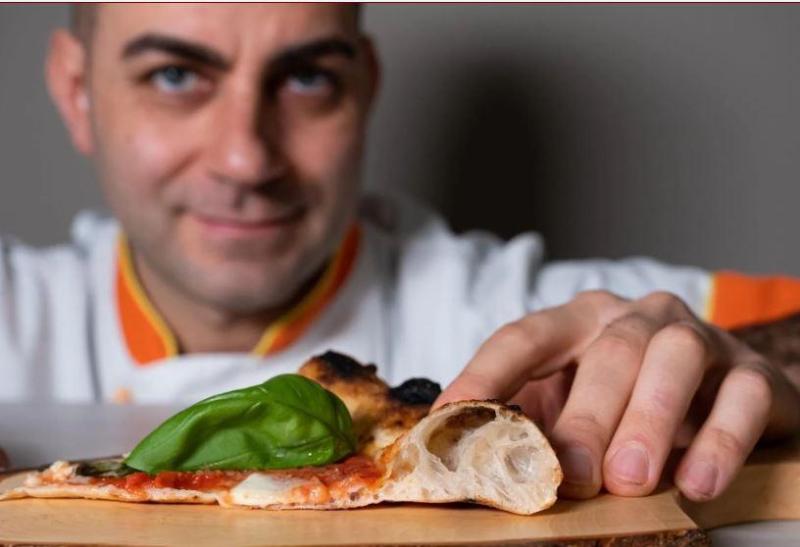
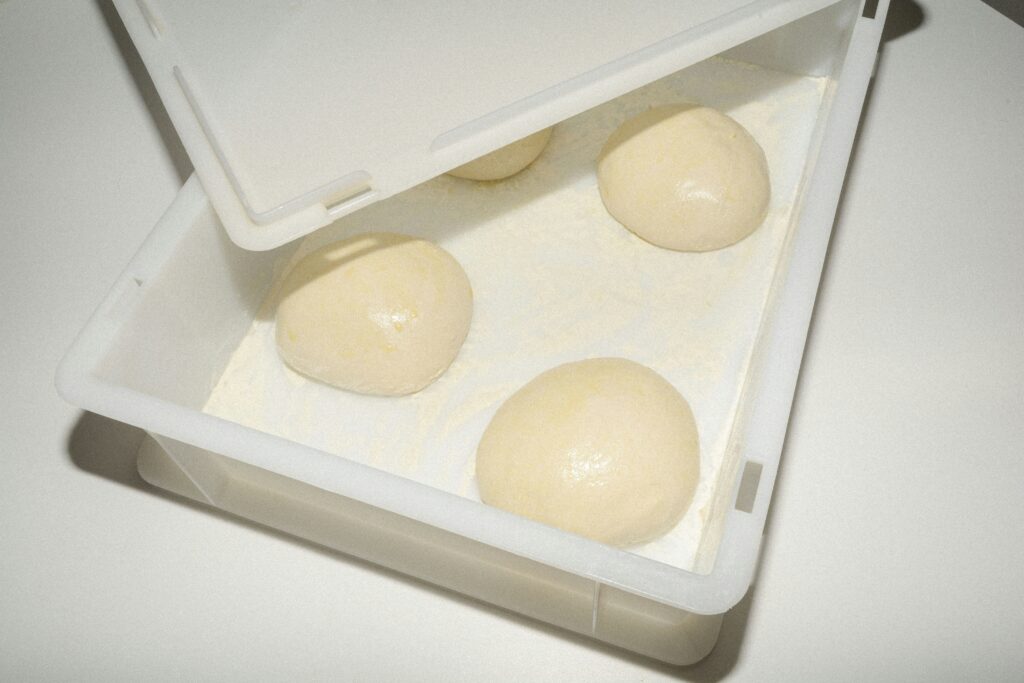
De Simone recounts further, “Antonio created a topping that brought together local ingredients and a hint of our homeland. I made a dough just right for the ingredients Antonio chose, savory and bold. There was a need for something that was up to par and could hold up. That’s why I used biga, for the thrust, then I mixed more types of flour as I am used to do and as it used to be done. So type 0 flour, whole wheat, type 1 and I then still added seeds. Needless to say, a long leavening also played a key role. Eighteen hours beforehand, I kneaded with water and used extra virgin olive oil as fat to make a focaccia base that could be crispy on the outside and soft on the inside, in this case adapting the dough to the restaurant’s ventilated oven, which is different from that of a pizzeria. After rolling out in the baking pan, the dough should be pitted so that it does not puff up and then baked for about 6 minutes at 260/270 °C.”
For his part, Danise explains, “I reasoned on how to bring a bit of Campania thinking about how to combine it with the products of the land that has been our host for years now. So I made a sauce with a blue buffalo cheese that is processed and aged in San Genesio in the province of Pavia. So I also wanted to use friarielli, which are a key product of the Neapolitan tradition to be added out of the oven to give it some freshness. Finally, the touch of sweetness of the Breme onion, a very special product that belongs to what is the ‘Pavia breadbasket,’ harvested only on certain days in July: to make it appreciated all year round we make a preserve.”
Also fundamental is fidelity to the principles of sustainability, a theme dear to Chic with Chic Respect, the association to which both professionals belong: “We don’t throw anything away and we enhance the outer part of the onion by making a powder that we add to the friarielli by also adding sea lettuce, again recalling our origins.” On the issue of sustainability, Paolo also recalls how it is a term that defines something that was already happening in the past: “It is tradition that reminds us of the concepts of sustainability and respect for the environment. It was already there in the peasant culture before the name in the recipes of the past where nothing was wasted.
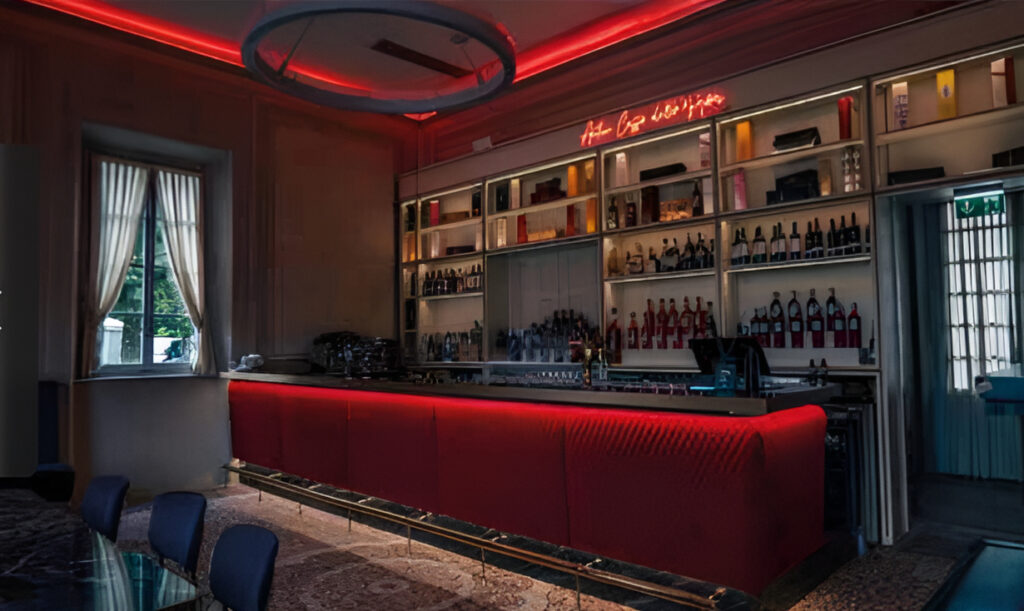
On the relationship between cuisine and pizza, both Paolo De Simone and Antonio Danise are clear in their minds that the gap is quickly closing. Danise recalls, “pizza has made great strides as a customer perception. The products that are used are no longer simply laid down but cooked, not simply taken from a box but processed in a certain way. Then the cook’s knowledge is integrated with that of the pizza maker to get a product that makes the most out of it. By now people who go to a certain type of pizzeria no longer just need to feed themselves, but to have a richer experience. So you have to bring to those at the table a little bit of history and culture, especially about the raw materials. This is to give something more that can give an emotion beyond the simple gastronomic aspect.” And in this regard De Simone says, “My new place in Milan, ready very soon, wants to be a new rebirth of pizza, beyond that outdated term that is gourmet. I want to give even more dignity to pizza by making my idea even closer to catering. Just as we stay longer in quality restaurants, so must it happen at my place. So no longer something too fast, you have to enjoy it slowly. The doughs will be many, so will be the versions, from crunch to focaccia to Neapolitan style. After all, the public is more ready and more attentive, and we must never stop in trying to improve. All this is also through the wait staff who make at least 50 percent of the experience. I’ve put a lot of work into it, and it’s the reception that will be the real change.”